In each market, a team can edit the site's copy and images. The editor itself cannot change what customers see on the site.
The screens use a plant nursery's web shop in Danish and English as the example, and every name, text and number is example data.
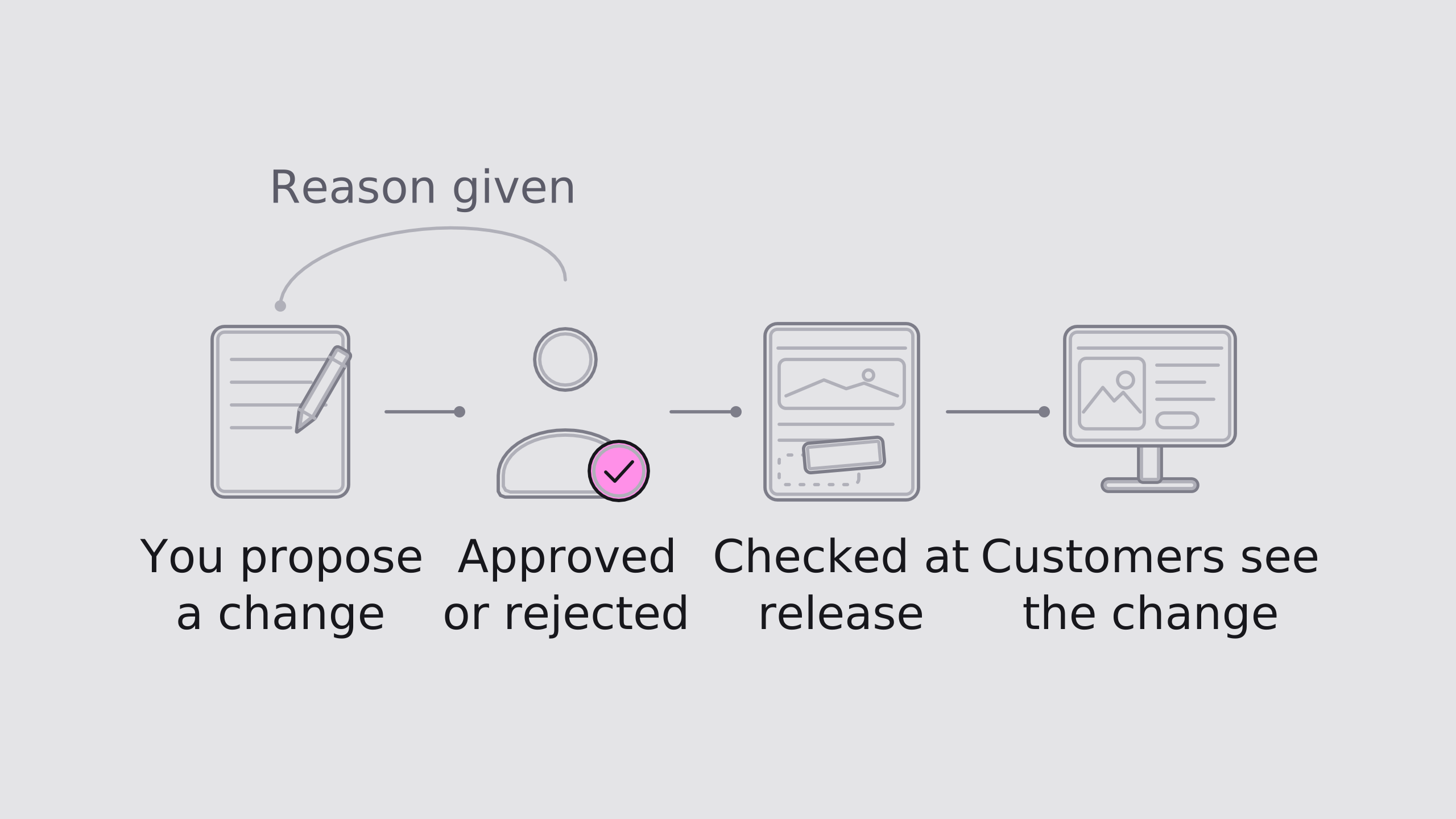
Some fields are locked and cannot be edited. Text fields have a character limit. The length is counted as you type, and the text is checked when it is saved. Saving an edit creates a proposed change showing what changed and who edited it. Customers still see the old text.
Reviewers only see changes for their own markets, newest first. The overview shows each change's type, where it belongs, before and after, who proposed it, and its status. Reviewers can approve or reject, and a rejection needs a reason. The decision is saved on the change, which has not yet been published.
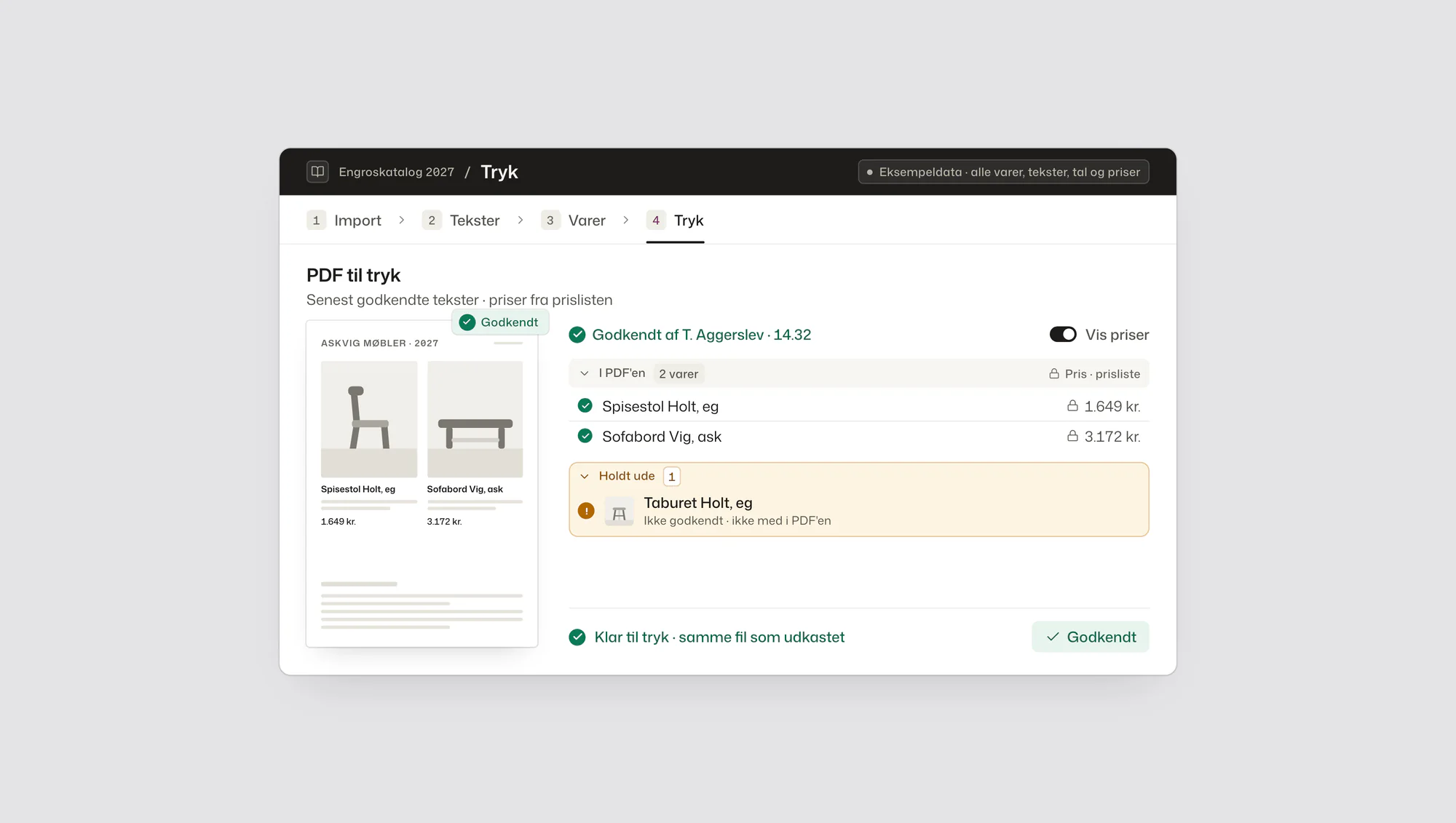
A developer starts each release by hand. The release fetches the approved changes, re-checks all the content and makes a new numbered version of that market's content. The old version is kept. If a check fails, the whole release stops and nothing is published. If the text has changed since the proposal was made, the proposal is left out of the release but stays approved. Once the new version is on the site, customers see the changes. Editors can try things out, because saving an edit does not publish it.